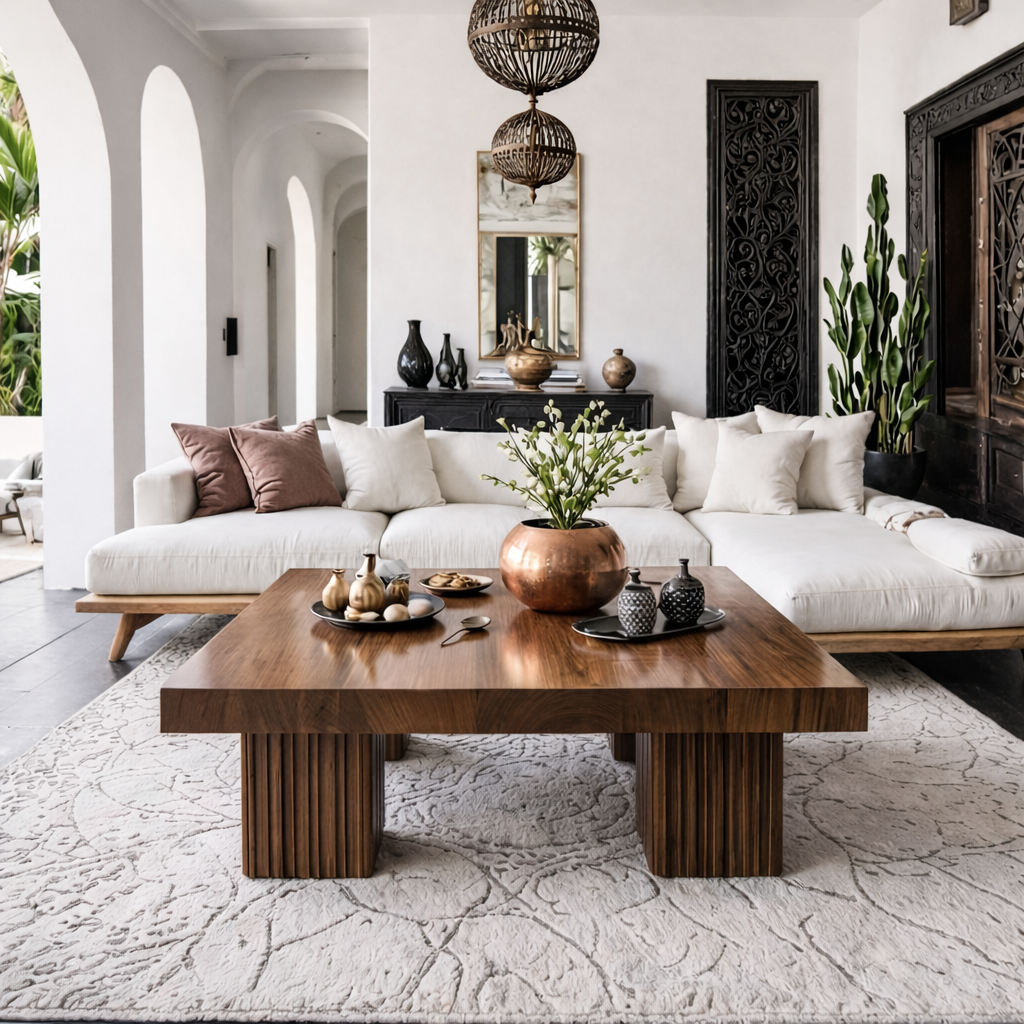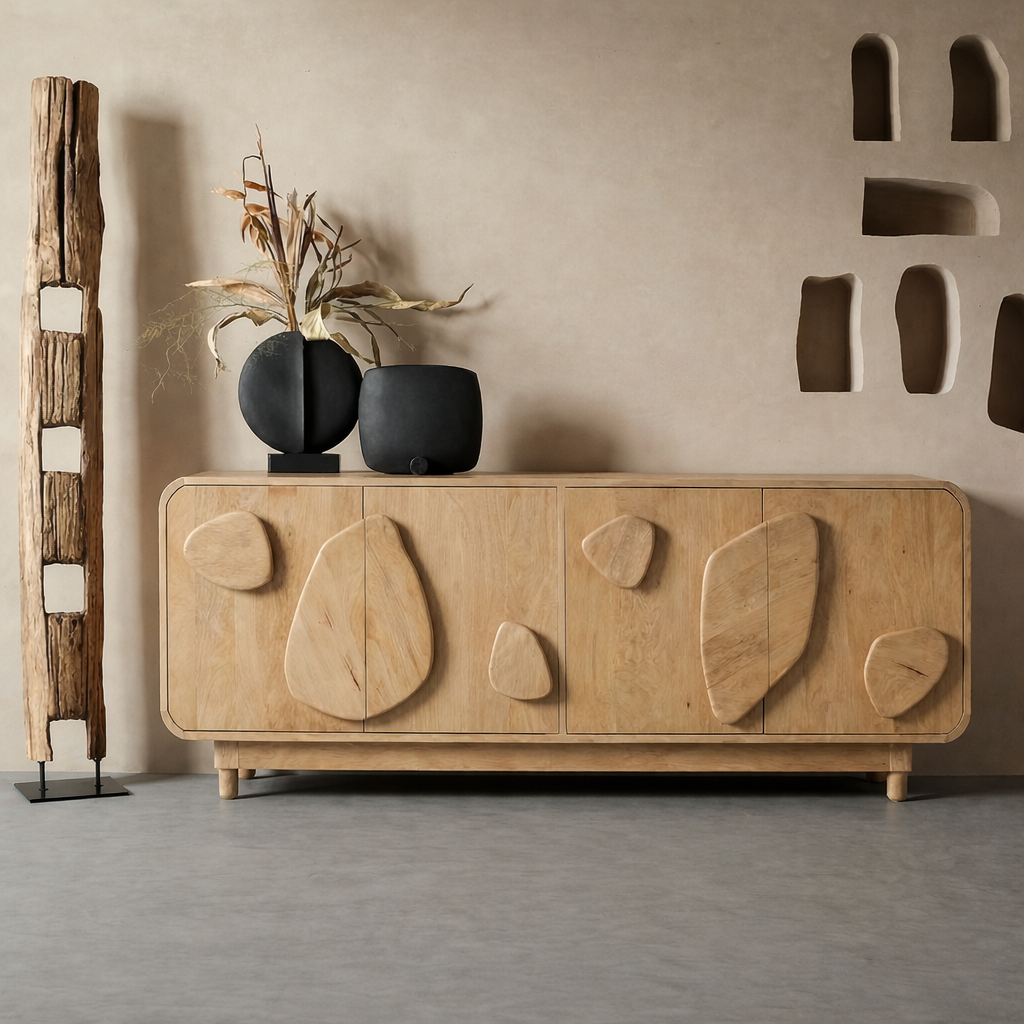
Walk into any furniture showroom or scroll through any home design feed and you'll see two styles dominating the conversation: mid-century modern and Scandinavian. They share a lot — clean lines, warm wood, restrained palettes, a sense of considered simplicity. They also get confused all the time, which is why most people end up with rooms that don't quite know which they're trying to be.
This guide breaks down the real differences between the two styles, where they overlap, and how to decide which one (or which mix) fits your home and the way you actually live.
A Quick History of Both Styles
Both styles emerged in the same era but in very different cultural contexts.
Mid-century modern developed in the United States and Europe between the 1940s and the late 1960s, shaped by post-war optimism, new manufacturing techniques, and designers like Charles and Ray Eames, Eero Saarinen, and George Nelson. The style celebrated form, color, and bold geometry — furniture as a statement of forward-looking design.
Scandinavian design grew out of Denmark, Sweden, Norway, and Finland over roughly the same period, driven by the Nordic concept of functionalism — beauty through usefulness. Designers like Hans Wegner, Arne Jacobsen, and Alvar Aalto emphasized craftsmanship, natural materials, and quiet restraint. Scandinavian style was shaped by long winters and small homes: it had to be functional, calming, and able to make the most of natural light.
Today, both styles have evolved well beyond their original eras, but the underlying DNA still shows up in the furniture you can buy now.
The Visual Differences (Side by Side)
Here's how the two styles actually differ when you put them next to each other.
Wood Tones
Mid-century modern leans toward richer, warmer woods — walnut, teak, rosewood, oak with darker stains. The wood is often a key part of the visual identity: tapered legs, sculptural shapes, grain that's meant to be seen and admired.
Scandinavian prefers lighter, paler woods — birch, ash, light oak, sometimes whitewashed pine. The goal is brightness. Wood is treated as a calm background element, not a focal point.
Color Palette
Mid-century modern isn't afraid of color. Mustard yellow, burnt orange, olive green, teal, warm rust — these were signature mid-century accents and still appear in the style today, often paired with neutral upholstery.
Scandinavian stays in a much narrower range. Whites, soft greys, warm beiges, occasional muted blues or sage greens. Color is used sparingly, almost reluctantly. The room itself is meant to feel like a quiet exhale.
Shapes and Silhouettes
Mid-century modern loves geometric confidence — tapered legs angled outward, rectangular tops with sharp edges softened slightly, sculptural curves on chair backs and table bases. The pieces have personality. They're meant to be looked at.
Scandinavian favors soft, rounded forms — curved chair edges, gently arched table bases, surfaces that invite touch. The shapes are quieter. Pieces are designed to recede when not in use.
Materials and Textiles
Mid-century modern combines wood with leather, metal, and bold-patterned fabrics. Brass accents, leather upholstery, geometric textiles — these are signature mid-century moves.
Scandinavian sticks to natural, tactile materials — wool, linen, raw cotton, sheepskin, jute. Patterns are rare; texture does the work. Metals, when used, are usually muted (matte black, brushed steel) rather than warm (brass, copper).
Which Style Suits Which Kind of Home?
The choice usually comes down to what you want a room to feel like.
Mid-Century Modern Works Best When…
- Your home has higher ceilings and good natural light — mid-century pieces can feel heavy in cramped or dim rooms
- You want furniture that makes a visual statement without going formal
- You enjoy mixing eras (mid-century pairs well with modern, industrial, and even vintage pieces)
- You're drawn to warm, lived-in spaces with character and color
- You like furniture with personality — pieces that get noticed and remembered
A mid-century natural wood console or a mid-century accent chair with upholstered seat can anchor a room and define its tone in a way few other styles can.
Scandinavian Works Best When…
- You live in a smaller space, an apartment, or a home with limited natural light
- You want rooms that feel calm, open, and uncluttered
- You prefer less furniture, chosen carefully, over more furniture chosen quickly
- You're drawn to neutral palettes and let texture and material do the visual work
- You value furniture that disappears into the background, leaving the focus on people and daily life
A Scandinavian accent chair with a spindle wood frame or a Scandinavian cabinet with carved wood elements brings warmth without weight — ideal for spaces where calm is the priority.
Can You Mix the Two?
Yes. In fact, most well-designed homes today aren't strictly one or the other — they borrow from both.
The blend often called "organic modern" or "warm minimalism" sits at the intersection of mid-century and Scandinavian: lighter than full mid-century, warmer than strict Scandinavian, with rounded shapes and natural materials but more presence than pure Nordic restraint.
If you want to mix the two without it looking accidental, follow three rules:
1. Pick one style as the foundation. Roughly 70% of your room should commit to one style. The other 30% can borrow from the second style for contrast and warmth.
2. Match the wood tones. This is the most common mix-up. A walnut mid-century console and a light birch Scandinavian chair in the same room will fight each other. Either match the wood tones across pieces, or commit to a deliberate two-tone contrast and stick to it consistently.
3. Let one style dominate the personality. If you want a calm, recessive room, lead with Scandinavian and add a single mid-century piece for warmth. If you want a room with character, lead with mid-century and add Scandinavian pieces to soften it.
Common Mistakes to Avoid
A few errors come up over and over when people try to commit to either style:
- Mixing too many bold mid-century pieces in a small room. Mid-century furniture has presence. Three statement pieces in a 12×12 room will feel like a showroom, not a home. Edit ruthlessly.
- Going so minimal with Scandinavian that the room feels empty. Scandinavian style rewards restraint, not absence. A room with three pieces of furniture and nothing else doesn't feel calm — it feels unfinished. Add textiles, rugs, and warm lighting.
- Ignoring the upholstery. Both styles depend heavily on upholstery choices. Cheap fabric on a beautiful mid-century chair frame undoes the whole look. Same with thin, scratchy textiles in a Scandinavian space — the calm depends on tactile warmth.
- Forcing the style on the wrong room. A bright Scandinavian aesthetic in a dark, low-ceilinged basement feels off. A bold mid-century approach in a tiny apartment feels claustrophobic. Match the style to the room you have, not the room you wish you had.
A Quick Decision Guide
If you only have 30 seconds to decide:
- Choose mid-century modern if you want warmth, character, and rooms that have a clear personality.
- Choose Scandinavian if you want calm, brightness, and rooms that feel like a quiet retreat.
- Mix both if your home has different rooms with different jobs — Scandinavian in the bedroom for calm, mid-century in the living room for energy.
Neither is right or wrong. They just answer different questions about how you want to feel when you walk through the door.
Find Pieces That Fit Either Style
Whether you're committing to one style or mixing both, the key is choosing furniture with intention. Browse our full furniture collection to see both mid-century and Scandinavian pieces side by side — and find what feels right for the home you're building.